12-Gauge vs. 20-Gauge Shotguns for Duck Hunting
Published on October 23, 2025 by Jace Bauserman
Duck hunting instilled in me a love of the outdoors. When I was 10, I walked an icy, steaming drainage ditch with my father. Dad wasn’t a hunter, but he let me take my test and followed me afield that day. Peering down the ditch, I spied a duck. I didn’t know the species, whether there were more, or if it was a drake or a hen. I just knew it was a duck. My heart thundered. I swung wide into an open grainfield, using the canal bank for cover. When the flowing water came into view, four ducks took flight. I raised my single-shot 20-gauge, fired, and a Suzie fell.
That day changed me. That one hen mallard duck opened a whole new world to me. I spent my high school and college years learning the ins and outs of decoying ducks on big and small water and perfecting my calling. Though my hunting life has taken me around the globe for big and small game, I still love ducks and hunt them whenever I can.
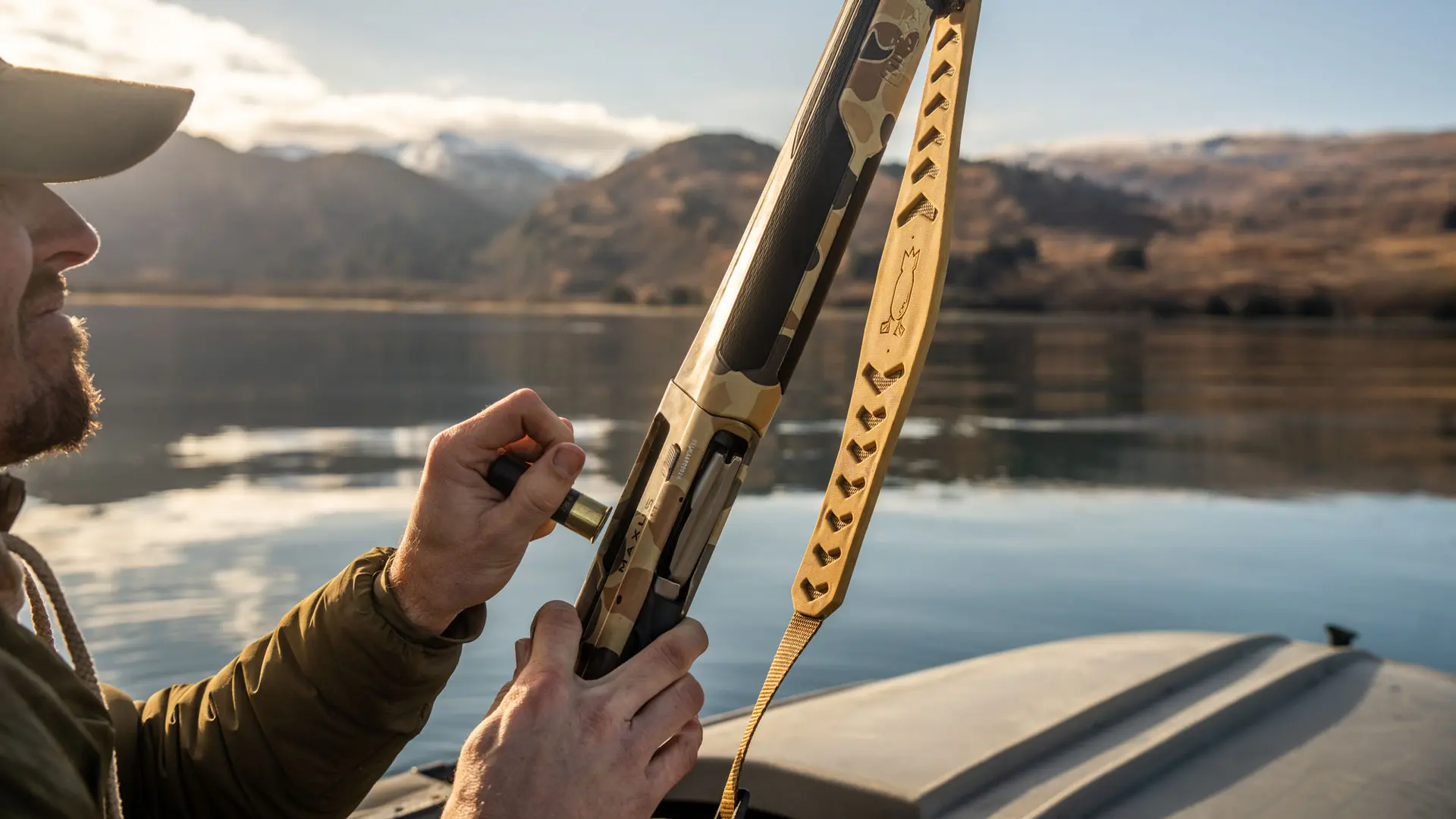
My go-to duck guns haven’t changed in years. I shoot a Browning Maxus II and an A5; both are chambered to handle 2-3/4, 3, and 3-1/2-inch shotshells. I’ve tested and tinkered with sub-gauge shotguns, and I like them. Still, at day’s end, I’m greedy. I don’t care about reduced recoil, weight, or the “cool” factor of killing a limit of greenheads with a sub-gauge. I want a long 28-inch barrel, an extended modified or full choke, and a high-pellet-count shotshell.
Many of my hunting buddies, some of whom go back to high school, tease me. They tell me, a lot actually, “Bause, you’ll grow up and drop to a sub-gauge someday.”

Our waterfowl crew is split. Half of us prefer a 12-gauge and the other half tote 20-gauge shotguns when fowl is on the to-hunt menu.
This isn’t an article bashing either gauge. This article explains the benefits and disadvantages of duck hunting with 12- and 20-gauge shotguns. This article gives you some banger Browning choices, and at the end, you should have a good idea of what’s right for you.

What Are the Benefits of A 12-Gauge Shotgun for Duck Hunting
Whether I’m hunting small, fast-flying teal, widgeon on a tight creek bottom, or mallards in an open grain field, I prefer a shotgun that gives me options. My Browning Maxus II and A5 semi-automatic shotguns handle 2-3/4-, 3-, and 3-1/2-inch shotshells. When hunting smaller teal and small puddle ducks, I like 2-3/4-inch #4 and #5 shot. If I'm targeting larger puddle ducks, I jump up to 3-inch #2s, and if the hunt calls for a strong mix of ducks and geese, I like 3-1/2-inch #1 and BB shot. A 12-gauge gives me incredible versatility.
Another big benefit of the 12-gauge is the payload. Because the shotshell’s hull is wider, it accepts more pellets. More pellets are a good thing. With the right choke, a 12-gauge with a 28-inch barrel puts a lot of pellets in the air. When you take the time to test different loads and chokes, you’ll discover a perfect recipe that lets you use a full or modified choke and put pellets on target while maintaining excellent density.

What Are the Disadvantages of A 12-Gauge Shotgun for Duck Hunting
Duck hunting can be high-volume shooting, and I’ve had plenty of sore-shoulder days. As a hunter, I know it’s part of the game. But for those being introduced to hunting and shooting, you want them to have a good experience, and you especially don’t want a new or small-framed shooter to experience heavy recoil. It’s not only uncomfortable, but it scares them and can develop bad shooting habits. Heavy recoil rocks the shoulder area, causing shooters to anticipate the kick, lift their cheek off the comb, and shoot poorly. Small-framed shooters aren’t ready to handle 12-gauge recoil, especially with heavy-payload 3- and 3-1/2-inch shotshells.
Another disadvantage of a 12-gauge for duck hunting is weight. Many hunters prefer a lighter shotgun to carry across muddy fields and damp wetland environments. 20-gauge shooters also say a lighter, more compact 20 comes to the shoulder faster, allowing them to get on target quicker.
What Are the Benefits of A 20-Gauge Shotgun for Duck Hunting
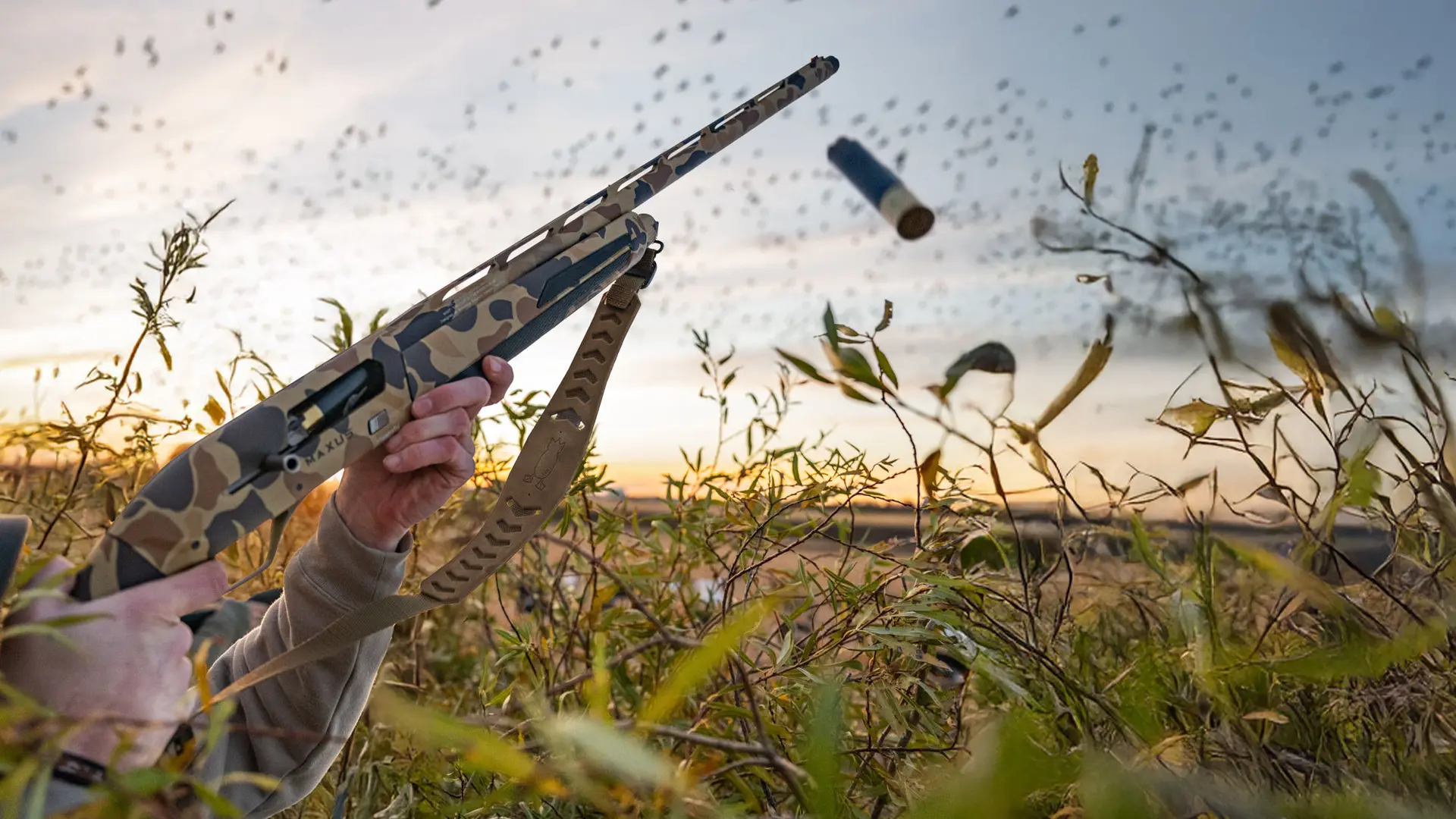
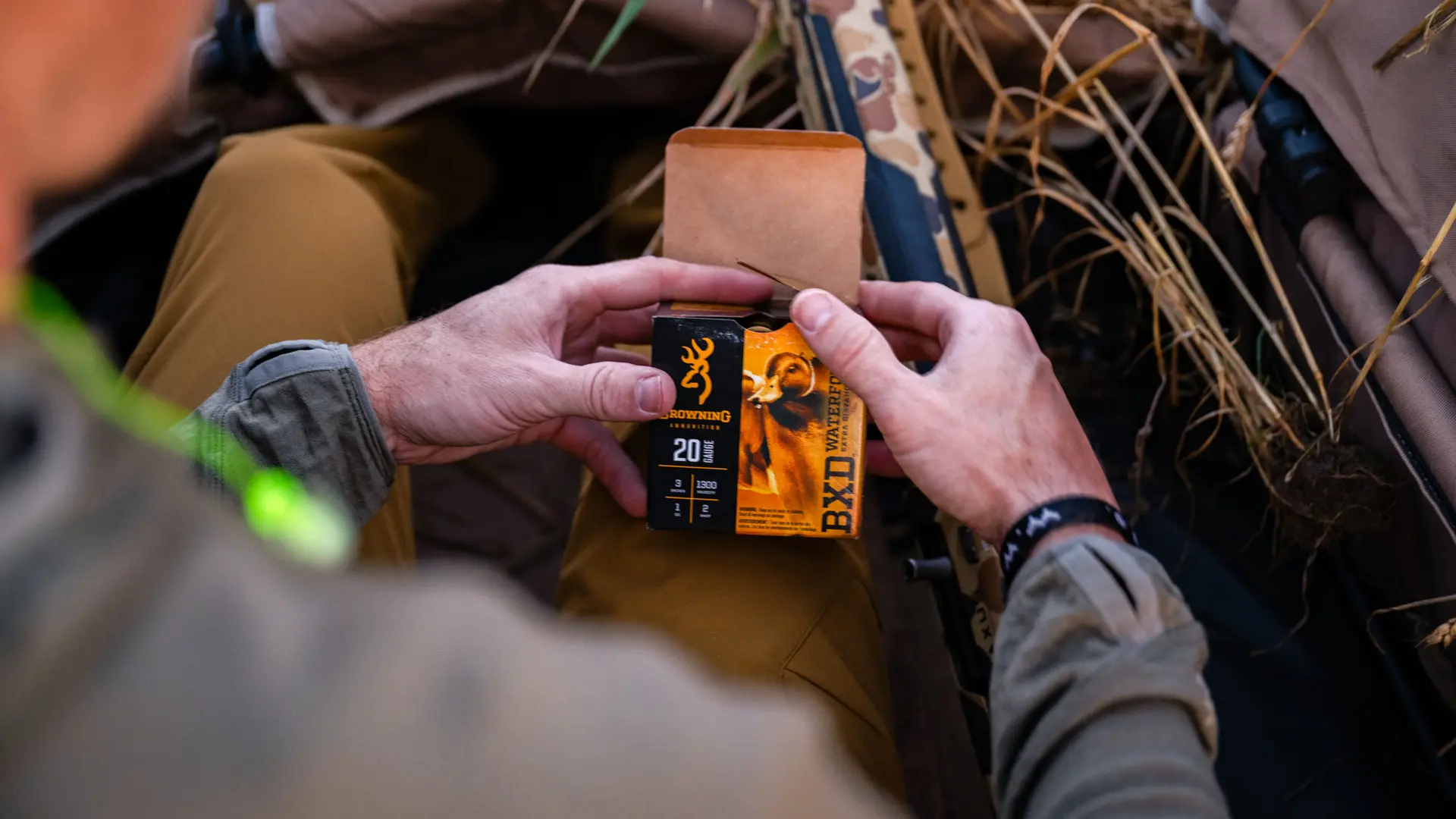
Shotshells have come a long way, and a 20-gauge is more than capable for duck or goose hunting. The biggest benefits of a 20-gauge like Browning’s A5 Camo 20 Gauge are reduced recoil, reduced weight, and a smaller frame than its older, bigger A5 brother. The A5 Camo 20 Gauge is lightweight, easy to handle, sits comfortably on the shoulder, and delivers plenty of killing power.
What Are the Disadvantages of A 20-Gauge Shotgun for Duck Hunting
My 20-gauge buddies kill a lot of ducks. Most of the time, though, those ducks are close. Duck hunting over decoys is supposed to be a close-range game, but as I mentioned earlier, I’m greedy. I’m melting fleeing ducks farther out and finishing off cripples swimming on the water or running on land much more efficiently than my 20-gauge-toting buddies. I’m pulling more doubles and triples. I’ve also noticed that pellet velocity matters on windy days when ducks move quickly. I appreciate the extra 100 fps (on average) my 12-gauge shotshells provide me.
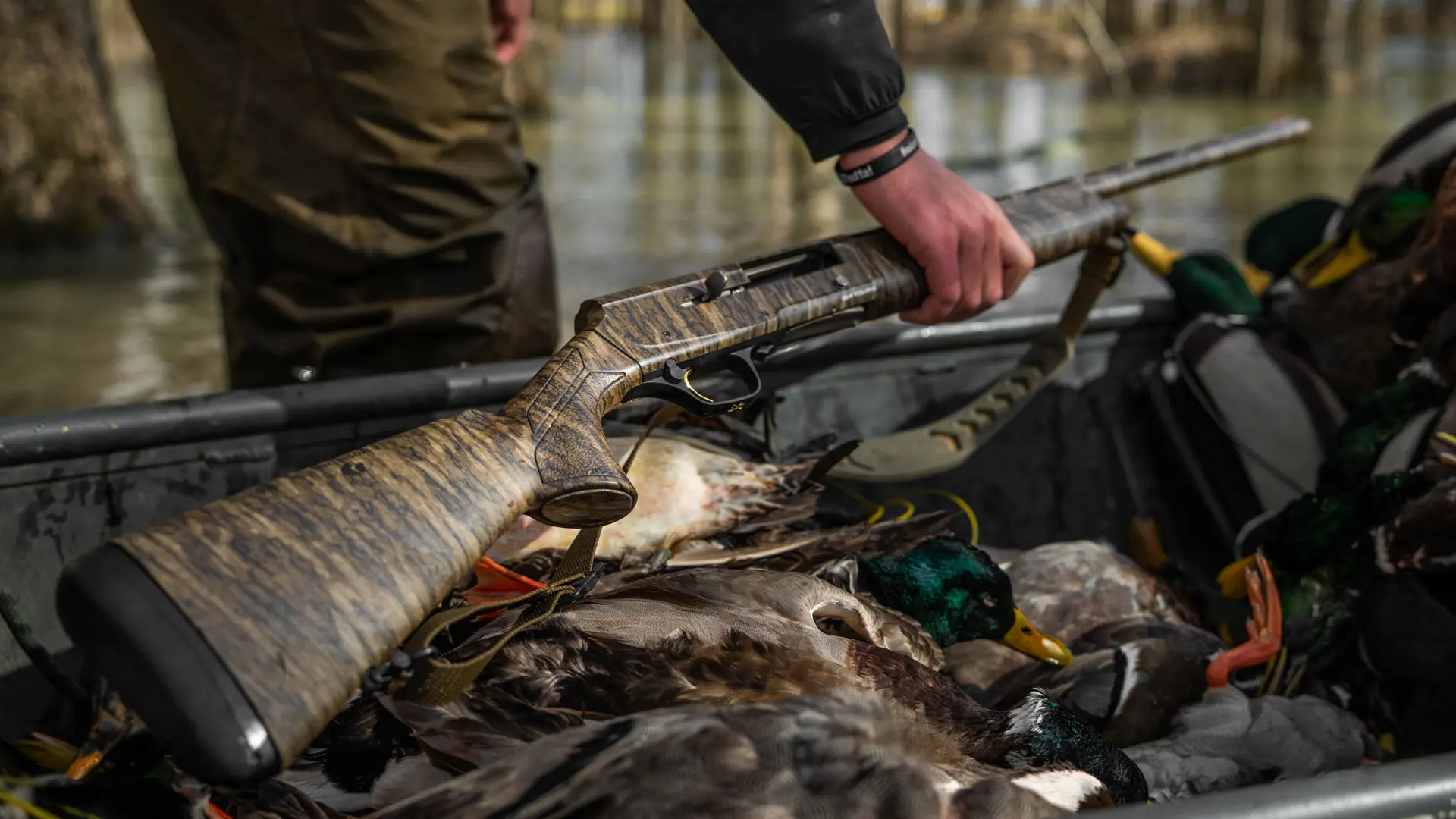
My Top Two 12-Gauge Duck Guns
My favorite duck-hunting shotgun is Browning’s Maxus II Camo with a 28-inch barrel. The composite stock has a SoftFlex cheek pad that makes it easier to keep a solid cheek weld, even when the weather turns cold and blustery. It also works with the Inflex II recoil pad to take some of the sting out from under your cheek — a welcome feature when you’re touching off heavy 3½ inch loads. The pad directs recoil down and away from your face, helping you stay on the gun, swing through the bird, and get back on target for a follow-up shot. That matters when the birds keep coming, and you’re trying to make the most of every opportunity.
The rubber overmolding on the grip and forearm provides a secure hold, while the oversized controls are easy to use with cold hands. You’re less likely to fumble with the safety or bolt when things move fast.
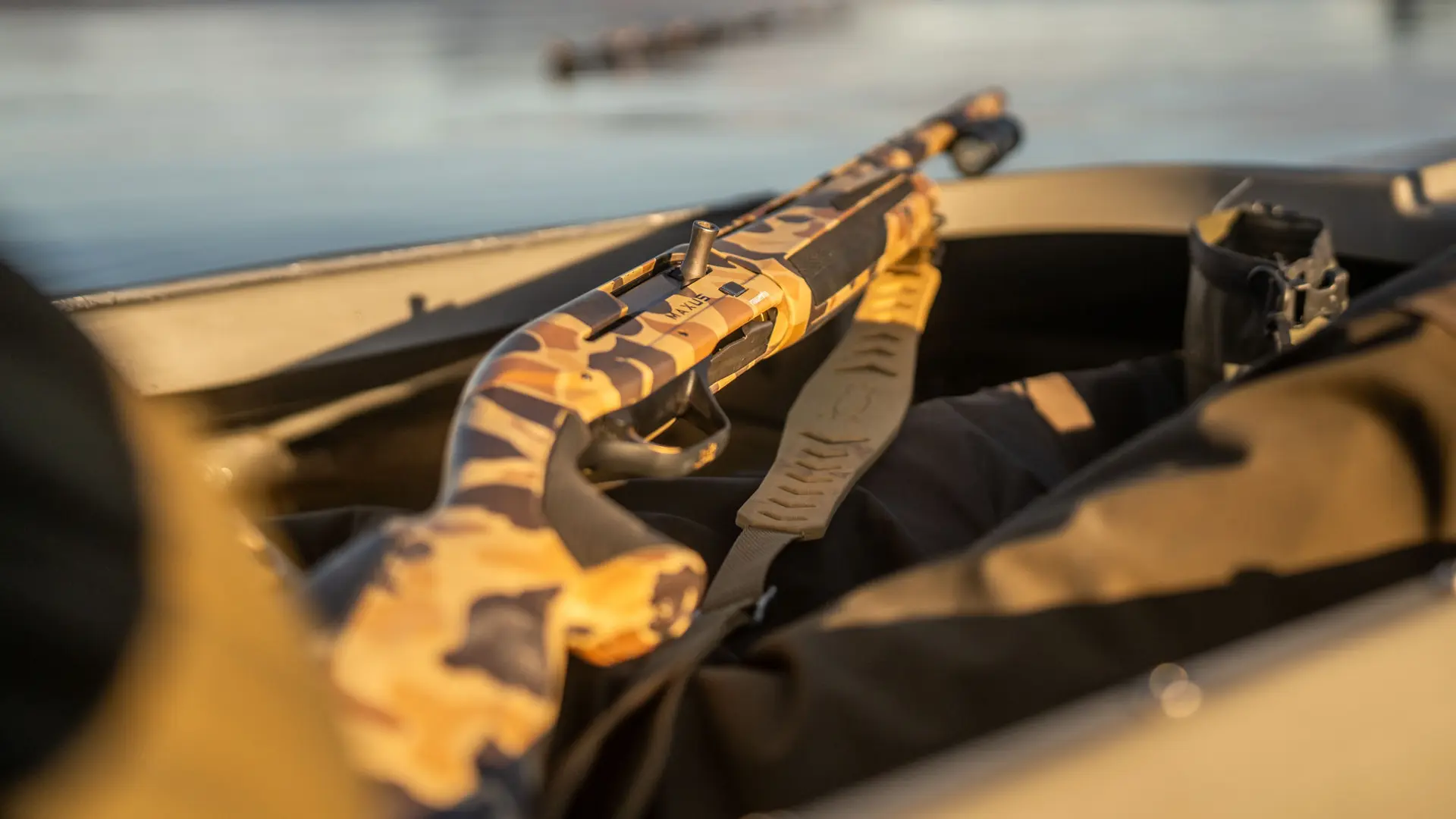
The Power Drive Gas System handles a wide range of loads. Large exhaust ports help manage gas from heavier loads, while the piston’s longer stroke helps the gun cycle reliably with lighter loads. I’ll admit I don’t clean my Maxus II as often as I should. The gun takes a beating and keeps making it rain ducks.
I also like the raised rib, front fiber-optic sight, and mid-bead. I’m not an aimer when I’m breaking clays or shooting birds; I’m a pointer and a swinger, and it mostly comes down to feel. Still, I notice the beads when I glance down the rib. Browning’s 50/50 point of impact puts half the pattern above the target and half below it. The extended, knurled Invector-Plus chokes have also worked well for me with steel, steel-and-tungsten blends, pure tungsten, and bismuth. I’ve yet to find a load that my Invector-Plus chokes don’t seem to like.
Browning A5 Wicked Wing
A waterfowl widow maker, the A5 Wicked Wing is a fantastic duck gun. I like the oversized bolt release, and the Burnt Bronze Cerakote finish on the barrel and receiver gives it a distinctive waterfowl look while helping protect the metal from the elements. The finish also cuts down on glare, which helps in bright, open conditions where ducks often spot movement quickly. The extended Invector-DS choke tubes round out the setup. I’ve had good results with them, and they give the shotgun a purposeful waterfowl feel.
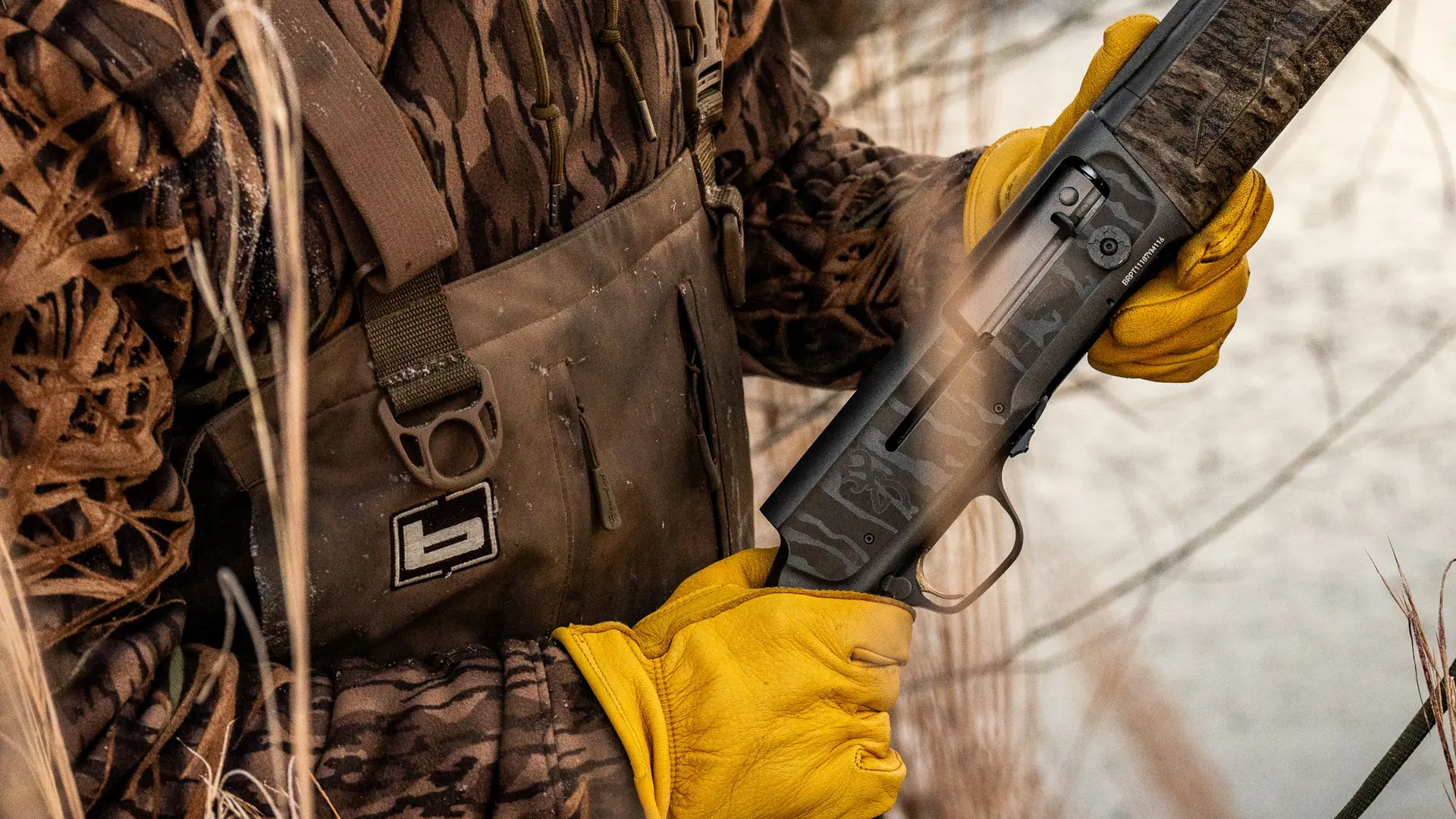
The A5’s humpback receiver gives me a long sighting plane along the rib. The Wicked Wing and Camo models also come with a fiber-optic front sight and ivory mid-bead. The two beads provide aiming references without adding clutter to the barrel.
The Kinematic Drive System uses recoil energy to cycle the action. Browning designed it to cycle quickly and consistently across a wide range of loads, from 2¾-inch shells to 3½-inch magnums. That versatility is handy for duck hunting, where the right load depends on the conditions and the birds. The TurnKey Magazine Plug lets you easily adjust the magazine capacity to meet hunting regulations.
The A5 has the same shot pattern performance enhancing features as their target shotguns. Total Barrel Dynamics combines a Back-Bored barrel, the versatile Invector-DS choke tube system, and the Vector Pro lengthened forcing cone. Lengthening the forcing cone is a popular addition to target shotguns. Vector Pro changes the geometry of the forcing cone, creating a more gradual transition from chamber to bore for reduced pellet deformation and more pellets in the pattern’s core.
The A5’s comfortable grip and slim, long forearm put my forward hand far out for better balance. For me, that makes the gun feel quick and easy to swing; qualities I value when ducks are working in close, and I need to stay on a bird or make a quick follow-up shot.
Another great 12-gauge option from Browning is the A5 Camo.
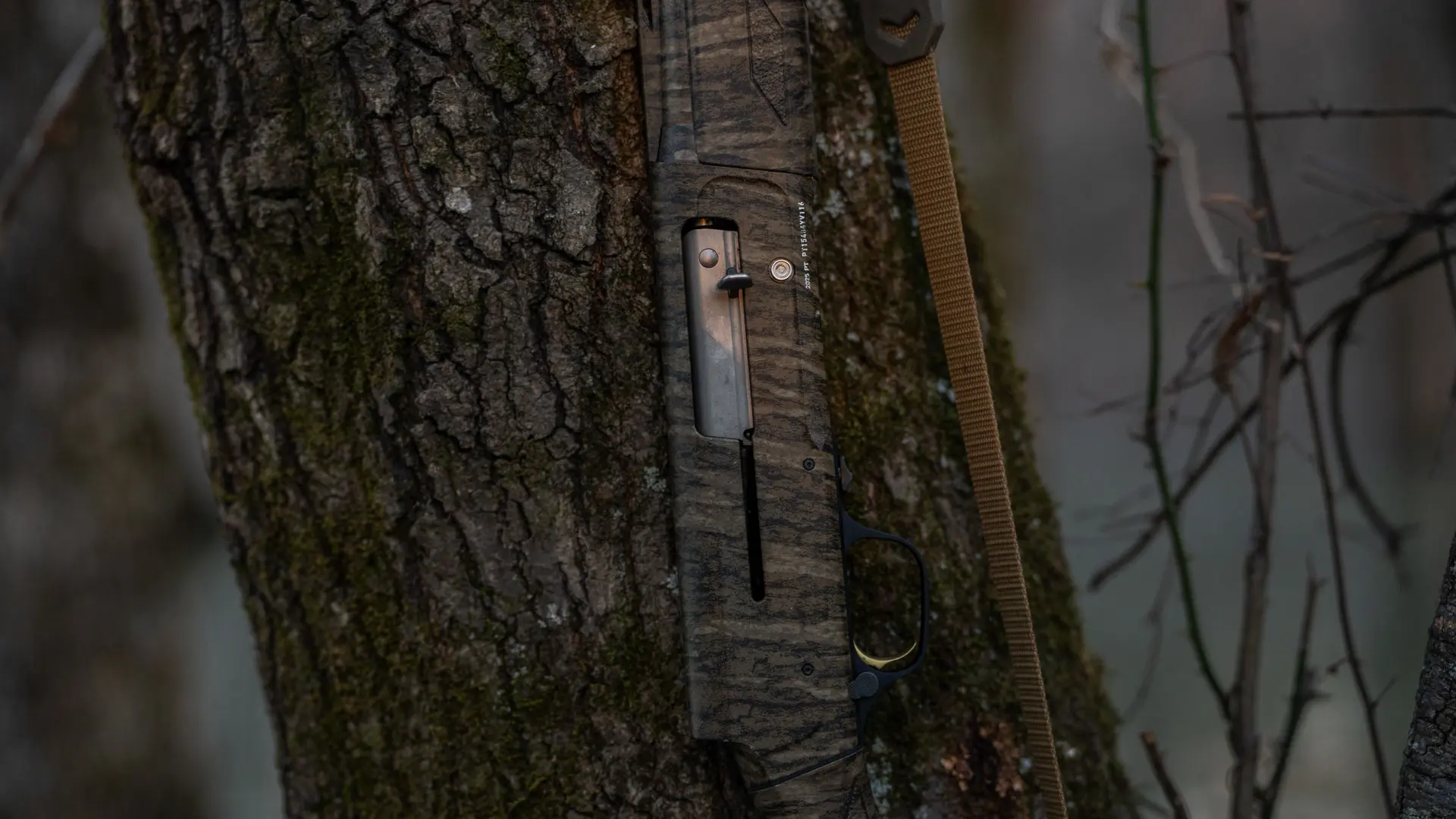
My Top 20-Gauge Duck Gun
Available in 26- and 28-inch barrel offerings and chambered to handle 2-3/4- and 3-inch shotshells, Browning’s sub-6-pound A5 Camo 20 Gauge is what the sub-gauge Duck Doctor ordered. This lightweight autoloader is ready out of the box for any waterfowl adventure, and the AURIC camo pattern helps it disappear in any environment. The A5 Camo 20 Gauge comes to the shoulder like butter, and the composite stock, with textured gripping surfaces and a high vertical grip, enhances shootability. The A5 Camo 20 Gauge features a fiber-optic front sight and an ivory mid-bead, and it comes with a trio of choke tubes. Spend some time patterning, and you’ll have no trouble filling duck totes when you take this sub-gauge beauty afield.
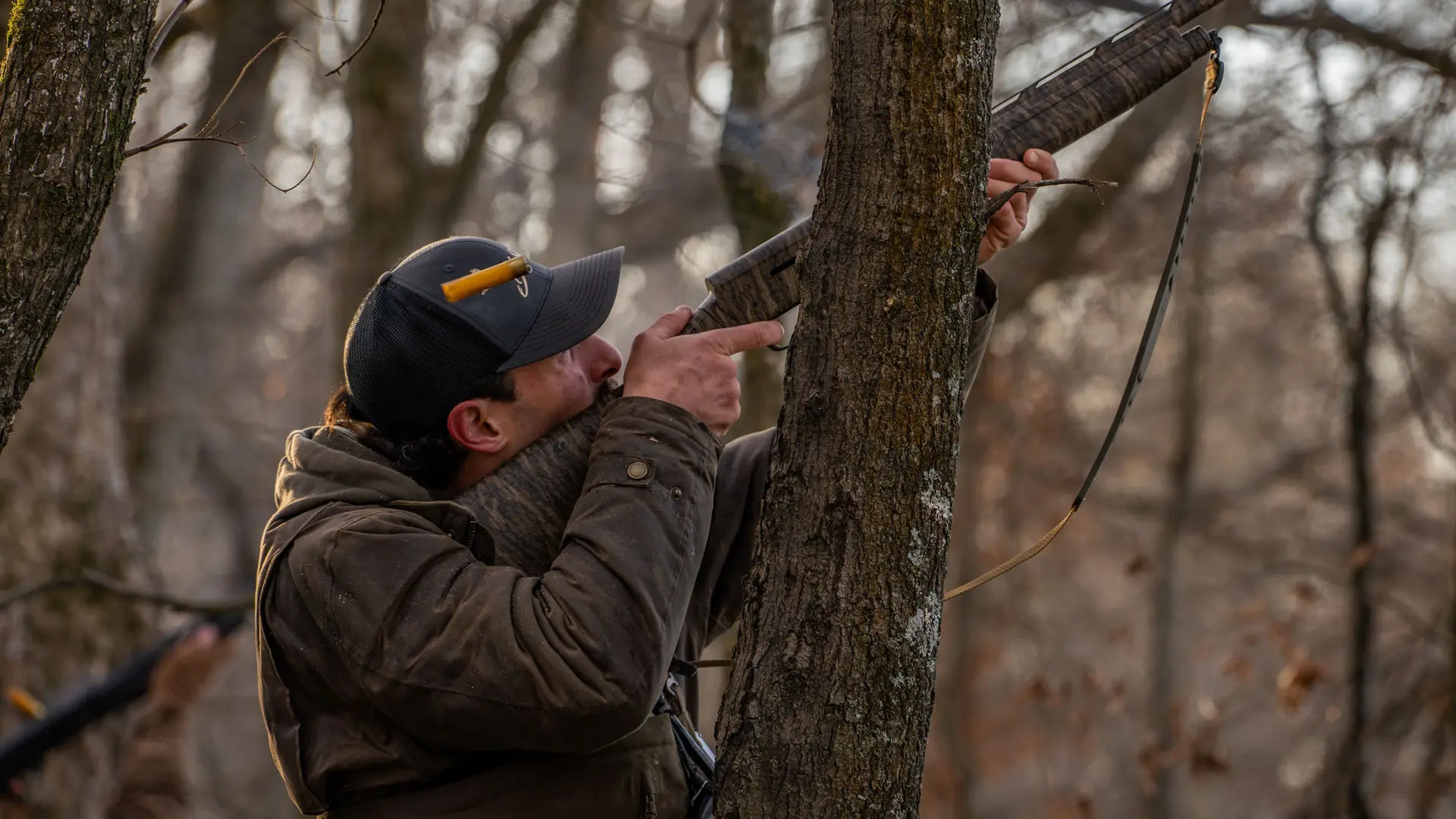
The A5’s Kinematic Drive System uses recoil energy to cycle the action. It’s a straightforward, recoil-operated design, and Browning says it’s built to handle a wide range of 20-gauge field loads without adjustment. Because the system vents gases through the barrel, the action stays cleaner than a gas-operated system.
The barrel combines Back-Bored Technology, a Vector Pro lengthened forcing cone, and the Invector-DS choke system to support consistent patterns with steel shot. Add the A5’s familiar humpback sighting plane, Inflex II recoil pad, and adjustable stock spacers, and you have a lightweight duck gun that’s built for long days afield.
Final Thoughts
I may never live down the teasing from my 20-gauge buddies, but I still reach for a 12. I like the payload, the load options, and the confidence a long-barreled gun gives me for my hunting style. That said, I’ve watched plenty of ducks fall to a 20, and its lighter weight and softer recoil make it a smart choice for many hunters, especially new and smaller-framed shooters. No single gauge is right for everyone. Pattern your shotgun, choose a load that suits your conditions, and hunt with the gun that feels right in your hands.