Vector Pro
Browning Vector Pro Lengthened Forcing Cone
By lengthening the forcing cone in some Browning shotgun models, hunters and competitive shooters receive a performance advantage for more bagged game or a competitive edge at the range. Many shotgun enthusiasts pay high aftermarket prices for this modification, but it is considered the standard on many Browning shotguns.
What is the Forcing Cone?
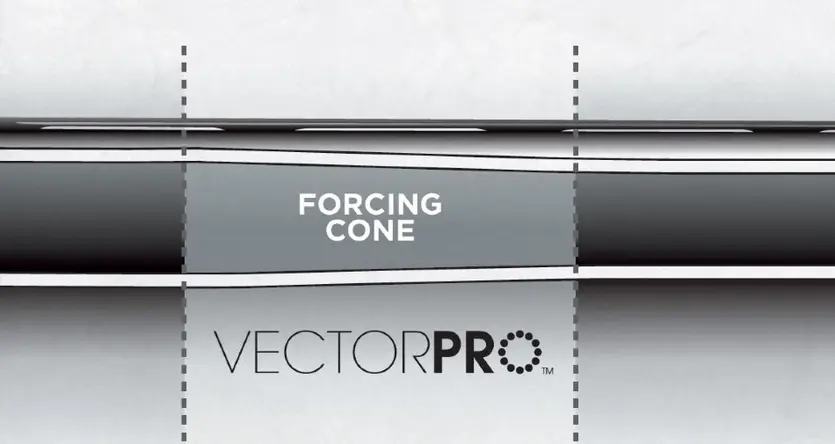
The forcing cone is the tapered transition between the chamber and bore that constricts the shot column. The Vector Pro design extends the length of the forcing cone, creating more gradual taper that reduces stress on the shot column as it moves into the bore, reducing pellet deformation and resulting in more pellets in the center of the pattern.
Performance Advantages
The longer forcing cone creates a gradual transition into the barrel. This engineered taper delivers three distinct performance advantages:
- Fewer Deformed Pellets: Gradual constriction reduces stress on the shot column, keeping the pellets perfectly round.
- More Uniform Patterns: Round pellets fly straight. When pellets deform, they may stray away from your pattern, resulting in gaps in the pattern.
- Denser Center Cores: By preserving pellet integrity, more shot pellets are packed into the center of your target.
How Browning Vector Pro Beats the Competition
Our competitors lack the longer, more gradual taper design of the Vector Pro forcing cone, making lengthened forcing cones a popular gunsmithing service. Vector Pro geometry maximizes pattern uniformity and consistency without expensive aftermarket gunsmithing procedures. This system is a standard feature on:
- A5
- BT-99
- Citori 825 (12, 20, and 28 gauge only)
- Citori (12, 20, and 28 gauge only)
- Citori 725 (12, 20, and 28 gauge only)
- Cynergy
The Science of Browning Back-Bored Technology
Browning pioneered Back-Bored Technology to complement the extended forcing cone. These two components work together to deliver the perfect balance of velocity, comfortable shooting, and a lethal pattern density.
To learn more about Back-Bored Technology, click here.