You’ve Got Your Guns, Your Gear, But Also … A GUT!
Published on July 9, 2026 by Jace Bauserman
I’ve been told, more times than I can count, that physical fitness and hunting success don’t go hand in hand. I adamantly disagree! Since 2019, I’ve killed no fewer than two elk per year on public dirt. Western harvest statistics show success rates are below 10 percent when hunting bull elk on public land.
What’s that mean?
One out of every 10 hunters will kill a bull elk on public land this season. Of course, any hunter can luck out from time to time — luck always plays a role in hunting. However, luck favors the prepared, and if you want to beat the odds, fill your freezer with elk meat every single year, and become a true one percenter, read on.
I don’t tell you about my success to brag. Frankly, you don’t care about my success. If you’re reading this, you saw the title and got pulled in for one of two reasons: One, you have a belly, a dad bod, etc. Or, two, you know how fitness has improved your hunting success and are looking for a few more tips. Overall, you want to know how to consistently kill elk on public land out West. This article WILL help you do that.
My Elk & Fitness Background
In today’s Instafamous society, we have hunters giving classes, seminars, web advice, etc., with qualifications that fall somewhere between zero and none. It’s a fact! I watched a YouTube video a week or so ago. The video was about how to find and consistently kill big bulls out West. I got sucked in. I kill bulls every year but am always interested in learning more.
Two minutes into the 30-minute-long video, I realized the host’s impressive public-land bull was his first-ever bull. He wasn’t after the bull. He didn’t even know the bull was in the area. The hunter got lucky and smacked a giant. Good for him. However, that was his first bull in five years of hunting elk on public land. There’s nothing wrong with that. Killing elk, especially big elk, is difficult. However, killing a giant doesn’t make you an expert.
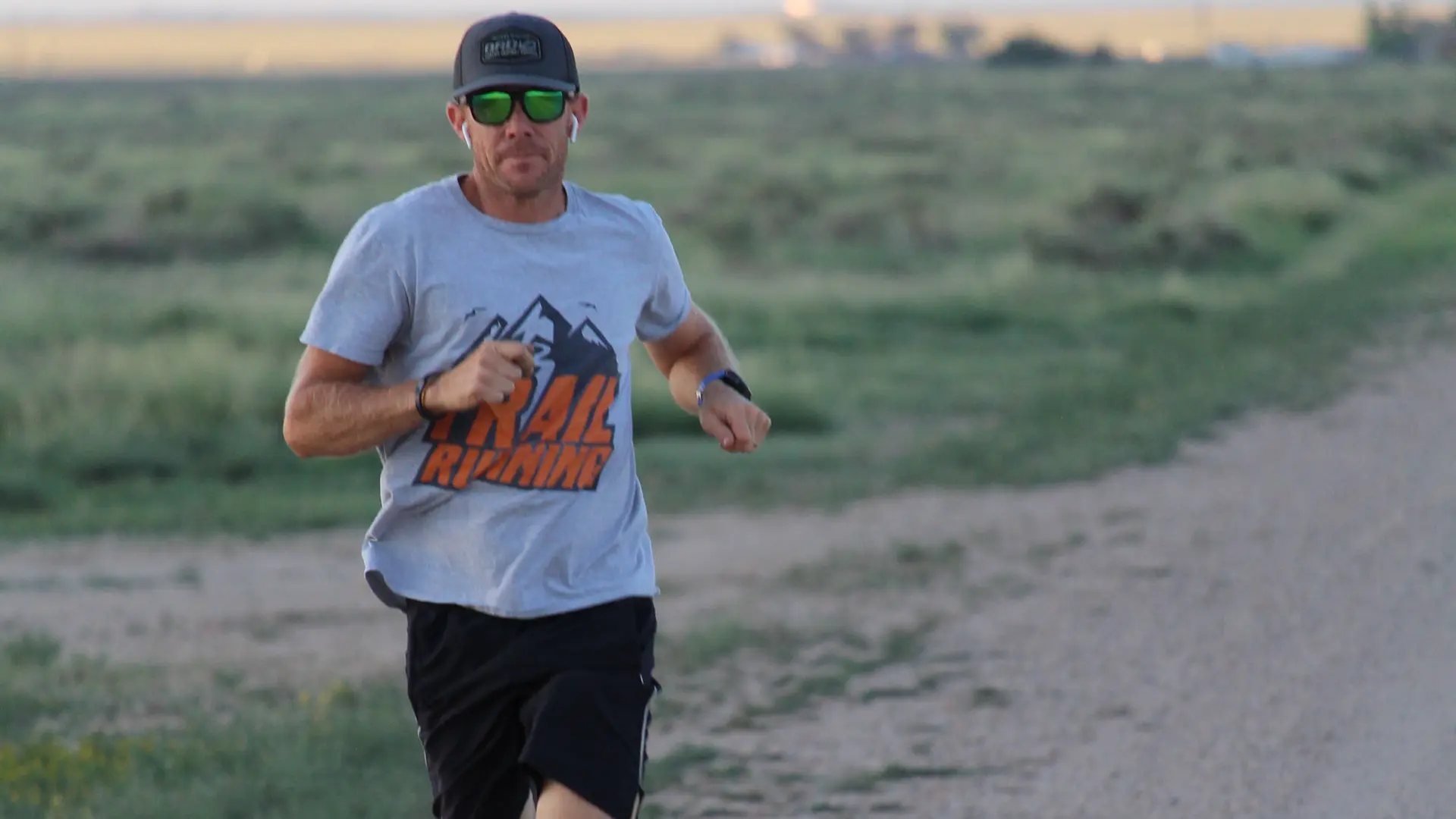
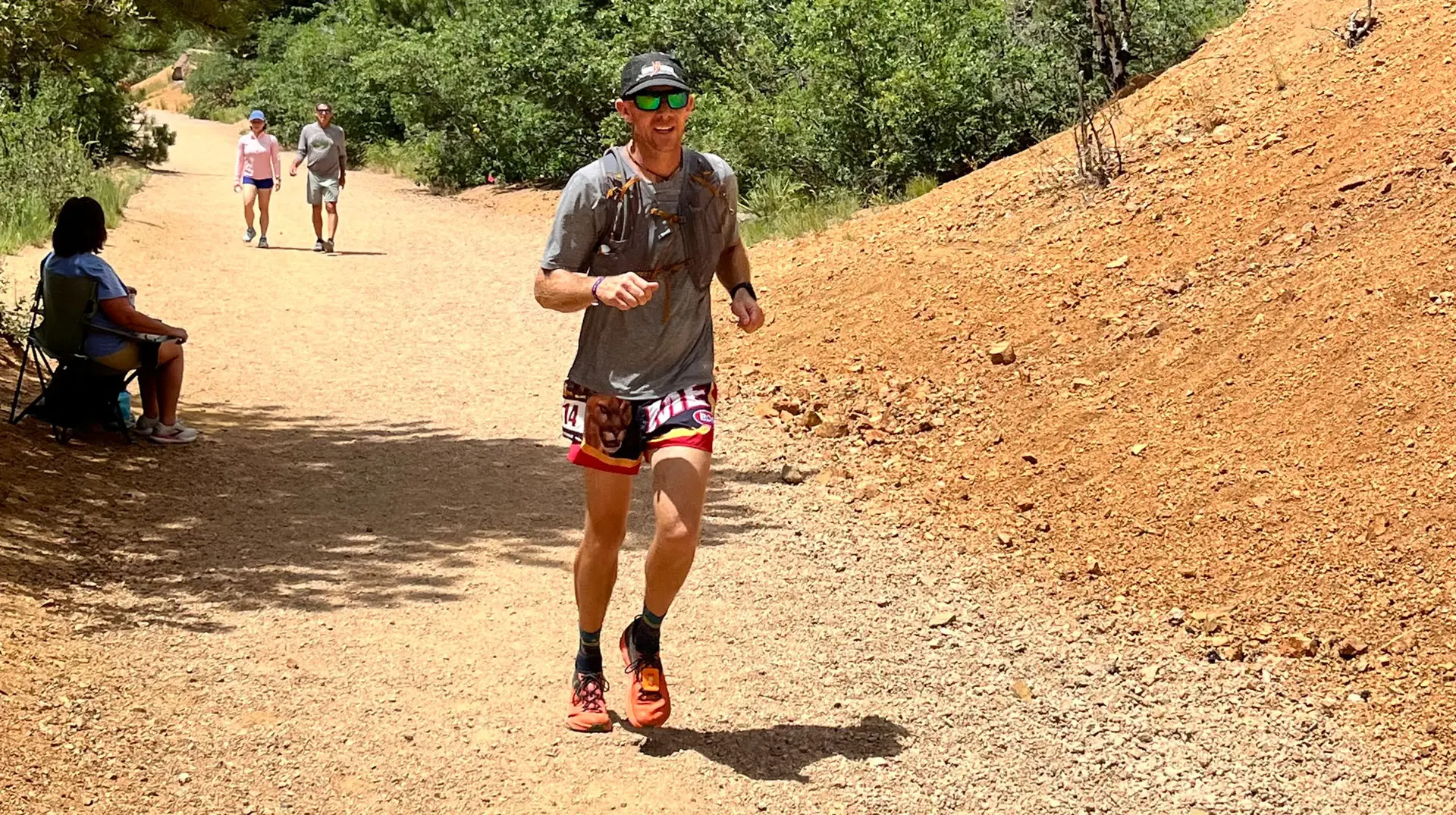
I’ve killed over 30 bull elk on public land and more on private. Aside from hunting, I’m an endurance sport fool. I’ve run four 100-mile ultramarathons in the mountains. On two of those four races, I’ve stood on the podium. I’ve run more marathons, 60K trail runs, and 50-mile mountain races than I can remember. I run, bike, and lift year-round. I build custom workout plans for ultrarunners and hunters looking to take their western hunting game to the next level. I am qualified to give fitness advice to Western hunters.
Taking Your Western Fitness Game to the Next Level
Nobody knows your current fitness level like you. The key: You must be truthful with yourself. Think of your fitness level on a scale of 0-10, 0 being the lowest and 10 being the highest.
Want a good test?
Grab a pair of decent running shoes and head to your local track. If you don’t have a track nearby, figure out a one mile loop, preferably on dirt. Why dirt? Because blacktop and concrete are hard on the body. Now, run that mile. Can you do it without stopping? What was your final time, and how did you feel afterward?
Don’t want to run? No sweat. Jump on a treadmill or stair climber. Can you climb 1,000 vertical feet in an hour? Again, evaluate: How did you feel during the workout? How does your body feel upon finishing?
Before you can start training, you need to be honest with yourself about your current level of physical fitness and set realistic goals.
The Beginner (Not Fit):
Americans, generally speaking, are soft. The word soft is enough to hurt feelings. I’m not worried about your feelings. I want you to experience the thrill of killing a big-game animal out West on your own because a moment like that can be life changing. If you fall into the beginner realm, this workout is a great place to begin your journey to being hunt-ready.
- Monday: Walk one mile on a flat surface at a sub-17-minute/mile pace in the morning before work. Use your lunch to walk more. You can go for a for a walk outside, walk up stairs in your office building, etc. The goal of this walk isn’t time, but persistence. If you see a hill, go up it. If you can climb one more flight of stairs before going back down, do it. After or before dinner, grab your family and get in another mile. The goal for the day is three miles and 10,000 steps. Stretch while your muscles are still warm.
- Tuesday: If haven’t pushed your body in a while, you’re going to be sore from Monday. Set the alarm before work and answer the bell. Walk 1/2-mile, stopping to do plenty of stretching to help get the lactic acid out and prevent injury. Take a break at lunch. You must walk before you can crawl. Sometime during the evening, walk one mile at a sub-17-minute-mile pace. Find a way to get in 10,000 steps.
- Wednesday: Hydrate and rest. If you’re feeling decent and want to keep the train rolling, head to your local gym and jump on a spin bike or dust off your trusty wheeled steed, put some wind in the tires and ride around the neighborhood. Shoot for three miles at a light and comfortable pace.
- Thursday: Walk when you can. Keep the pace light. Focus on steps throughout the day. Stand more and sit less at work. If you’re on the phone, put your headset on and move around the office. Take a longer way to the bathroom instead of the short route. Start forcing yourself TO DO HARD THINGS daily. Come evening, you’re back at the gym. Here’s your goal: 1/4-mile on the treadmill at a comfortable pace at 0 incline. Two-minute recovery. 1/4-mile on the treadmill at a comfortable pace at 4 incline. Three-minute recovery. 1/4-mile on the treadmill at a comfortable pace at 6 incline. Four-minute break. 1/4-mile on the treadmill at a light jog at 14 min./mile pace. The incline should be 0. 10-minute rest. 1-mile slow walk recovery on the treadmill.
- Friday: Keep it light today. Again, do something hard, but be smart about it. Listen to your body. The hard work for the day might be a 1-mile slow walk with the family. Still, focus on getting 8-10K steps in.
- Saturday: Repeat Thursday workout
- Sunday: Rest!
As you begin your western hunting workout journey, know that the first two weeks will be the most difficult. The key to success is consistency. When the alarm goes off, get out of bed. Waking up is half the battle.
It’s also important not to do too much too fast. Trying to do too much or going too fast can cause injury. You must listen to your body. Hydration is critical — especially during the hot summer months — and so is stretching, especially as we age. It’s also important to remember that a clean diet will make a significant difference if weight loss is the goal.
Where The Fitness Newbie Wants to Be Three Weeks Out from the Season
This is an excellent workout and test of fitness readiness. If you can do it, you’re ready for the West. The beginner workout above won’t get you here, but it will build the foundation and hopefully encourage you to do your research and build upon that fitness plan.
Measure out a one-mile loop. I always recommend running on dirt or a track when you can. The goal for the first mile is to go at about 70 percent of your lactic burn pace. Lactic burn pace is all out. Stay about 30 percent below that.
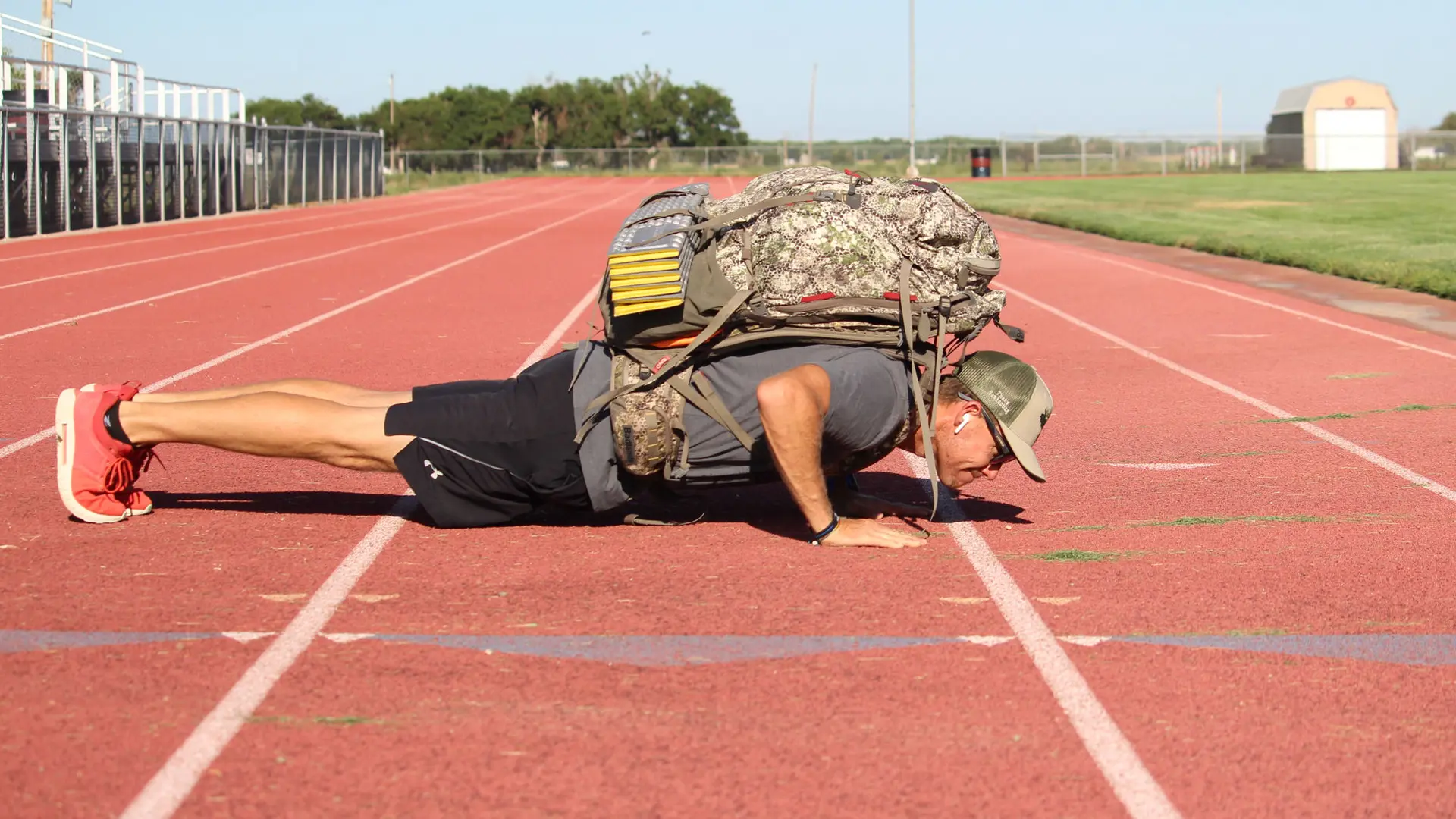
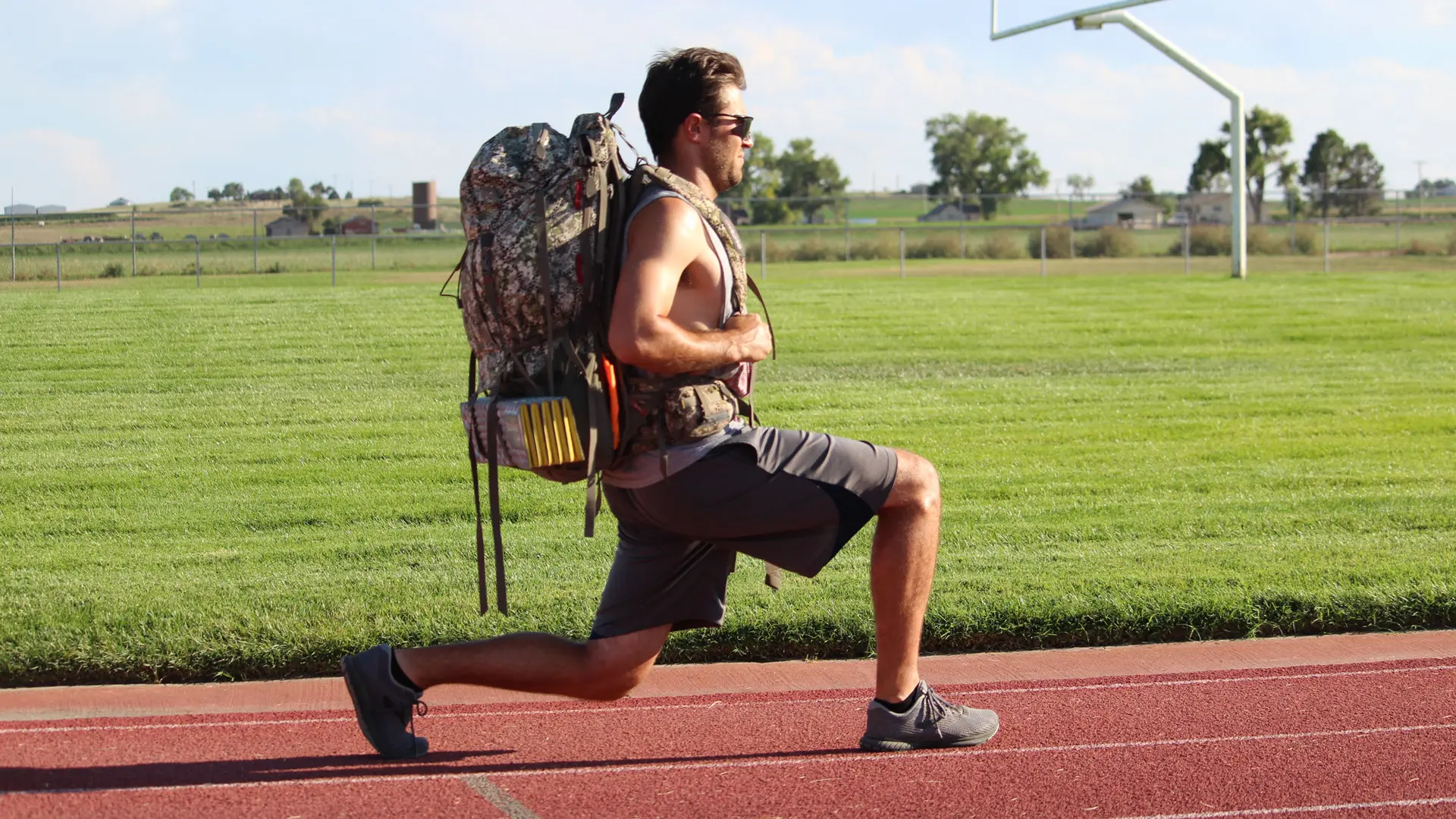
After the mile run, toss on a pack loaded with 50 pounds and speed walk the mile loop. After you clip off a mile, do 20 walking lunges with the pack on. Now drop the pack and run another mile at 60 percent of your lactic burn. Strap the pack back on and hit another mile with 20 walking lunges at the end. Drop the pack and crush one more mile at 40 percent of your lactic burn. Toss on the pack, speed-walk one more mile, and finish with 20 walking lunges. This is a killer. If you feel like you’re in great Western hunting shape, give this workout a go. Another good one is 2,000 feet of vertical gain on the treadmill in less than an hour, covering at least five miles.
Final Western Fitness Thoughts
Being in good shape will help you buck the western public-land odds and consistently fill tags. Those who are in good shape can stay on the hunt. They resist the negative psyche that comes a day or two into a hard hunt when fatigue starts making your decisions for you. Time spent in the woods is your best friend concerning harvest-rate consistency. The better shape you’re in, the mentally and physically stronger you will be.
Disclaimer: I am not a doctor, sports trainer, or licensed personal trainer. This one-week training plan is not for everyone. Make sure you tailor each workout to your exact needs. It’s also critical to understand that getting from the week one workout to the final workout requires a lot of work. You will not repeat the week one workout each and every week to reach this goal, it is merely a vehicle to get you pointed in the direction of success.