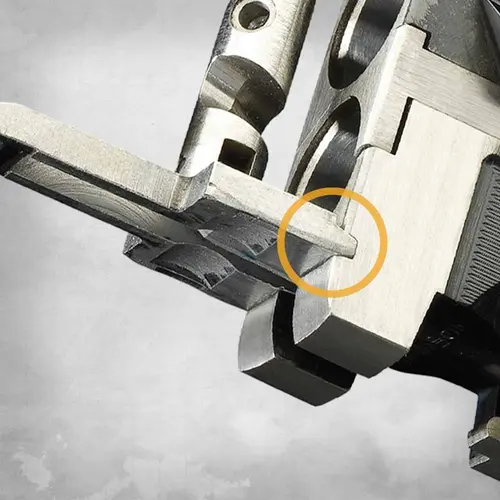
Locking Bolt
Browning Citori 825, Citori, and BT-99 shotguns are built with a transverse-mounted, full-width locking mechanism that secures the shotgun monoblock tightly to the receiver.
This iconic design, made famous by John M. Browning, ensures these platforms "Wear In, Not Out," and provide a lifetime of tight lockups and robust shooting performance.
How Does the Locking Bolt Work
Every time action closes, the monoblock must lock to the receiver with zero tolerance.
Unlike the smaller side pins found on the trunnion-based systems on many competitors' over-and-under shotguns, the classic Browning architecture utilizes two heavy-duty contact points:
- Tapered Locking Bolt: Slides forward horizontally out of the receiver face to wedge into a matching slot at the rear of the barrel monoblock.
- Full-Width Hinge Pin: Serves as the massive anchor that the monoblock hinges on.
Why Does Tapering the Locking Bolt Matter
Each time the shotgun fires, immense pressure pushes the barrel forward and the receiver rearward. This will naturally create a substantial amount of wear after years of intense use.
When a straight locking bolt is used, wear will eventually cause a loose or "shaky" action. The tapered design of Browning shotguns eliminates this problem.
- Continuous Seating: Since the locking bolt is cut at a precise wedge angle, it sits deeper into the monoblock as the metal wears over time.
- Automatic Wear Mitigation: The shotgun's spring-loaded top lever constantly pushes the wedge further, self-adjusting to maintain tight tolerances.
- Longevity: The tapered design is built to last, continuing to wear in over time.
Comparing the Locking Bolt to Trunnion Actions
| Design Attribute | Browning Tapered Bolt System | Trunnion-Style Systems |
| Primary Locking Component | Transverse-mounted, full-width tapered locking bolt and full-width hinge pin | Conical side locking lugs or top pins |
| Wear Profile | Self-adjusts over time | May require manual replacement of worn out parts |
| Contact Surface Area | Contact across the entire monoblock | Segmented contact points on receiver walls |