What Is an Over/Under Shotgun? Browning Superposed to Citori 825 Explained
Published on September 10, 2026 by Jace Bauserman
Browning offers shooters a smattering of shotgun options. From semi-automatics to over/unders to single-shots, the legendary gun maker crafts excellent shotguns that meet the demands and needs of any hunter or shooter. Browning offers right- and left-hand builds, sub-gauges, various barrel lengths, and works tirelessly to stay ahead of the “what hunters/shooters want” curve. Whether you’re a clay buster, upland goer, waterfowl junkie, or all the above, Browning’s over/under lineup should be on your radar.
Browning introduced the over/under shotgun to the general shooting public in 1931, with the Superposed being the first mass-produced over/under shotgun ever. The coolest part, though, is that after the wildly successful Superposed, Browning pivoted to its now-legendary Citori design in 1973. The latest iterations are the Citori 725 and the current Citori 825. Both these shotguns feature the reliability and handling a Browning over/under is known for, plus enhancements that set them apart from their namesake. That’s a lineage of success. Aside from the Cynergy line, which is its own over/under animal, Browning never ran off the Citori tracks.
Why?
Because hunters and shooters worldwide trust the Citori lineup, and if something isn’t broken, you don’t fix it. You keep tweaking and refining, and that is what Browning has done.
Before we dive too deep into Browning’s over/under legacy, we must first answer the question: What is an over/under shotgun?
Here we go!

What Is an Over/Under Shotgun?
An over/under shotgun is exactly what it sounds like: a double-barrel shotgun with one barrel stacked directly over the other. That simple layout gives the shooter two shots, two chokes, and a fast, instinctive sight picture that’s easy to love in the uplands, at the clays course, or in the duck blind. The shooter can run two of the same chokes or two different ones and choose which barrel to fire first.
What makes the over/under design so popular is its balance. The receiver tends to sit neatly between the hands, the barrels give the gun a clean pointability, and the break-action design makes loading, unloading, and verifying the gun is empty simple. Compared to many pumps and semi-autos, an over/under often feels more elegant, more deliberate, and more refined.
The design also has a practical side. With two barrels stacked vertically, the shooter gets two quick shots with different choke constrictions if needed, which is a big deal for clay target shooters and even bird hunters. The break-open action is mechanically straightforward, rugged, and easy to maintain. In short, the over/under is one of those shotgun designs that has stuck around because it just works.
And when people talk about the over/under shotgun, Browning is part of the conversation from the very beginning.
Browning Superposed: The First Mass-Produced Over/Under
If you want to talk about the lineage of Browning over/unders, you start with the gun that set the standard: the Browning Superposed.
Introduced in 1931, the Superposed is widely recognized as the first mass-produced over/under shotgun. That matters. Before the Superposed, over/unders existed, but they weren’t the commercial success or the production benchmark that John M. Browning’s design became.
The Superposed was John Browning’s final shotgun design, though he died before completion. His son, Val Browning, carried the Superposed torch across the finish line, and FN in Belgium brought it to production. The result was a shotgun that combined function, balance, and old-world craftsmanship in a way that turned heads then and still does now.
The Superposed was not just another shotgun. It was a statement piece. It was built with a level of fit and finish that matched Browning’s reputation for serious sporting arms. It quickly earned a following among clay shooters, upland hunters, and anyone who appreciated a refined break-action gun that could still handle real work.
The Superposed’s legacy is important because it established the Browning over/under identity: elegant, dependable, balanced, and built for shooters who care about both performance and tradition.

Why the Superposed Mattered
The Superposed wasn’t just successful because it was first. It was successful because it was great.
Browning gave shooters:
- a stacked-barrel shotgun with real commercial appeal
- excellent balance and handling
- a strong, reliable action
- a reputation for premium fit-and-finish
- a platform that became a benchmark for all future Browning over/unders
For decades, the Superposed was the Browning over/under. If you wanted a Browning break-action with stacked barrels, that was the gun. It became a classic and is still one of the most respected shotguns in the company’s history.
Citori: The Modern Browning Over/Under Era

By the early 1970s, Browning wanted a new over/under that could carry forward the Superposed’s spirit while being more production-friendly and accessible to more shooters. That led to the Browning Citori, which Browning introduced in 1973.
The Citori became the workhorse of the Browning over/under family, quickly becoming the practical, modern over/under that hunters and clay shooters could buy, shoot hard, and trust. Manufactured in Japan, it developed a reputation for durability, solid lockup, and broad model variety.
The Citori line matters because it kept Browning relevant in the over/under market for generations of shooters. It became the name most people think of when they hear “Browning O/U.”
What Made the Citori a Big Deal

The Citori brought together:
- dependable over/under function
- a rugged action suited for high round counts
- broad availability in field, sporting, and trap variants
- Browning’s recognizable styling and handling
- a price point that opened the Browning O/U world to more shooters
If the Superposed was Browning’s original masterpiece, the Citori was the platform that kept the Browning over/under legacy alive and thriving.
Citori 725: A Smarter, Slimmer Evolution

The Citori 725 modernized the Citori concept. Browning introduced the 725 as a lower-profile, refined evolution of the classic Citori design.
The biggest difference shooters noticed with the 725 was its in-the-hands feel. Browning worked to make it more streamlined and responsive. The receiver was lower, the handling livelier, and many shooters noted that the gun felt more “connected” to them.
The 725 also brought modern internal improvements, including a mechanical trigger system, which is a big point for many shooters. Mechanical triggers help ensure the second barrel can fire even if the first shell fails to ignite properly. That’s a practical upgrade for both clay shooters and hunters.
Why Shooters Liked the 725

The Citori 725 was built for shooters who wanted:
- a sleeker profile
- better handling dynamics
- modern trigger performance
- classic Browning dependability
- a gun that still looked and felt like a Browning, but with a sharper edge
It kept the Citori DNA intact, but it felt like Browning was paying attention to the little things shooters notice after long days on the range and in the field.
Citori 825: The Newest Step in the Lineage

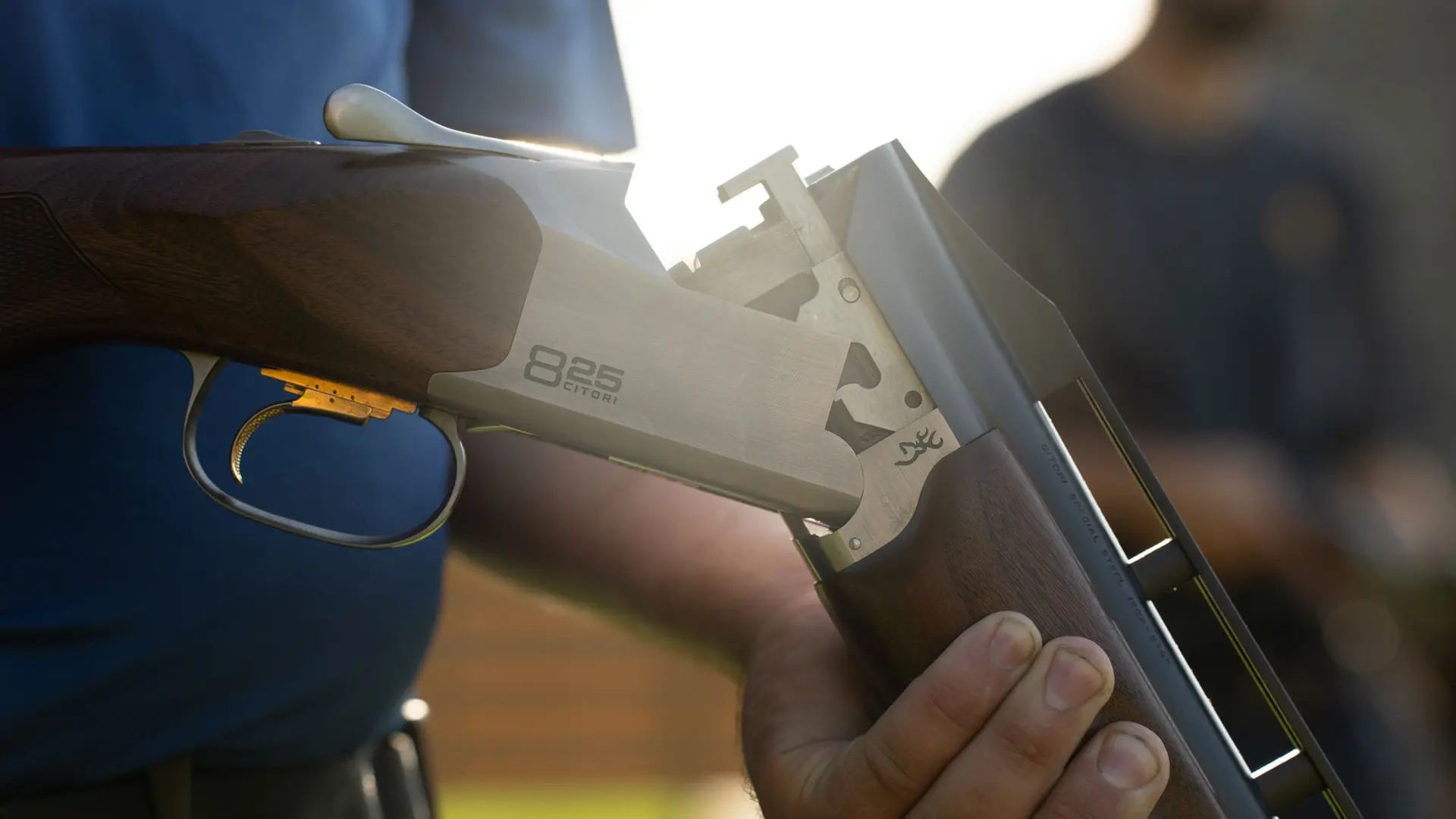
The Citori 825 continues the Browning over/under story into today.
Think of the 825 as the latest refinement of the formula that started with the Superposed and matured through the Citori and Citori 725. Browning’s goal here was not to reinvent the over/under. Browning doesn’t need to rebuild; it simply reloads. They have the Citori blueprints, and they keep refining them. That’s why the 825 replaced the 725.
The 825 represents continuity. That’s important. Browning isn’t chasing trends for the sake of novelty. Browning isn’t adding features for the sake of “adding new features.” Browning doesn’t do that. What Browning did with the 825 was take a proven design language and tighten the screws.
For shooters, that means a gun that should feel familiar if you know Browning over/unders, but a little more polished, a little more refined, and built with the expectations of today’s market in mind.
Why Browning’s Over/Unders Are Kings

Browning’s over/under shotguns have lasted because they solve a simple problem: they give the shooter a reliable, balanced, double-barrel shotgun that works across many disciplines.
Browning makes, and always has made, over/unders that:
- bust clays
- kill pheasants
- swing quick on quail
- carry easily all-day long
- have an aesthetic appeal that demands attention
The Superposed started the story. The Citori made it mainstream. The 725 refined it. The 825 carries it forward.